Showing posts with label books. Show all posts

Wednesday, February 2, 2011

In bounds the rabbit: Chinese New Year Yummies

My Chinese mother is a self-proclaimed banana, which I suppose is a kinder term than "twinkie." Vronsky is a self-proclaimed "egg," so I suppose everything evens out in the end. If you can't figure out what I am referring to here, think colors and pejorative terms for race.

Slang aside, I think there are a lot of "eggs" out there when it comes to food. My favorite part of Anthony Bourdain's Kitchen Confidential was where he decreed that, in all honesty, his favorite, quintessential New York meal was Chinese take-out, Sriracha sauce, a joint and a classic movie. Illegal drugs aside, a part of me truly does think that Chinese food really is the "world's cuisine." I am not kidding. You could find a "Lucky Noodle" in Nairobi and in St. Louis. And while the level of taste at these places could vary widely, from fake Chinese food like orange chicken, to wonderfully authentic, I always smile at the ubiquity of the cheesy fortune cookie and lo mein.

Since Chinese New Year's Eve is this Wednesday and Thursday ushers in the Year of the Rabbit, now's a good time to partake in the omnipresence of Chinese food and try some traditional Chinese New Year treats. Food has such a high standing in Chinese culture itself, the food served on the New Year is filled with tradition and some superstition.

For example, a whole roasted chicken symbolizes family togetherness, while noodles represent long life, so eat them whole and don't break them if you can! And my po-po made sure to remind me to eat some oranges or tangerines tomorrow night and Thursday, which symbolize good luck and Cantonese families will give the fruit to each other as gifts. Too bad I don't have any oranges from her orchard out in Sacramento. Those are the best...always sweet, never sour, and she always peels them for me in a single long peel, like she's done since I was little, because it still impresses me.

Fish also served whole, on the bone, is another traditional treat and done well (nice and thin and crispy) it is absolutely delicious and de-bones very easily. In fact, whole proteins are the M.O. for New Year meals as the act of cleaving meat could be perceived as cleaving family togetherness and unity, a big no-no. As far as your whole fish goes, don't be intimidated by the fact that it comes with the eyes still intact. My grandfather would always tell us to eat it because it would make us wise (all-seeing perhaps) but we never believed him. The fact that he never ate the eye either tipped us off...

Steamed rice cakes are the classic desert. Rice is life, the sweetness symbolizes richness, and the circular shape of the cake itself represents unity. Pomelo fruit is also a classic, but I actually don't care for the taste, but I'll eat plenty of leafy greens and gai lan (Chinese Broccoli), which are also "lucky," to counteract that.

In the moving book Mao's Last Dancer, Li, the protagonist fondly recalls making "jiaozi," or special New Year dumplings with his mother when he was a boy. He grew up in abject poverty in a collective farm in northern China, where "jiaozi" are tradition, and the family would scrimp and save for months to be able to afford enough meat, oil and dough to make the dumplings.

To balance out the excessive feasting that occurs on the eve of the new year, the first meal New Year's Day is traditionally vegetarian. This meat-free meal is also thought to generate good will on that first day as nothing was killed to make it.

The New Year feasting lasts for almost two weeks and you can learn more about each day and what food coincides with it here, but for a half-banana and an indulgent egg, one night of feasting is enough. I plan on making Vronsky's favorite "at home" meal: fresh white rice, steamed lapchong, some sauteed veggies (broccoli, water-chestnuts, snow-peas, ginger and carrots with soy sauce and garlic), and oranges for dessert. And then we will leave all the cleaning for the next day, since it is also bad luck to clean on the New Year, lest you sweep bad luck away. I am convinced that tradition was started by fed-up wives, who themselves were exhausted after the feast and the preparations the night before and needed a DAY OFF before tackling all that mess....

Wednesday, January 26, 2011

As Always, Julia

Vronsky is a very thoughtful fellow. The other day, he was walking by Book Court in Brooklyn, a marvelous independent bookstore I recommend you visit next you are in Cobble Hill, and saw As Always, Julia in the window, which is the entire collection of letters between Julia Child and Avis De Voto, who was a critic, gastronome, and member of the "literati" in Boston/Cambridge, as her husband was a prominent columnist for Harper's and she herself was a well known writer and critic for the Boston Globe among other things at a time when women, as a rule, did not engage in such intellectual pursuits and circles once they were married.

Julia and Avis were wonderful friends, but it would be many years before they first met face to face. The started off as pen pals. It all began when Child, then living in France with her husband, responded to one of Avis' husband's columns in Harper's, in which he bemoaned the fact that he could not find a decent knife in all of the United States. He had to order knives from abroad in order to get the sharpness and strength he needed to be even half-adept in the kitchen. Most of the knives available at the time were simple stainless steel which, although very easy to clean, did not hold an edge to the point where he said they couldn't even slice an apple, and if they were serrated, then you might as well go out and buy a new one. Plus, if he applied any sort of pressure to the handle, like when boning meat or cutting through something tough, like say, a carrot, the knife would actually break off in his hand at the handle.

Contrary to what maybe people believe at the time, dull knives are actually more dangerous. By pushing harder to make a cut, you exert more force and have less control, often resulting in slippage or breakage which could really do some damage. It is just like a fresh versus a dull razor when you're shaving, to use a silly simile, but it is true. When you have to force the knife, the loss of control is when accidents happen.

Anyway, Julia Child responded to this column with a nice note and a new knife straight from France. Avis wrote her a letter in return, thanking her for the knife and inquiring just exactly what she was up to in France, and so the friendship was born.

Reading these letters, it first and foremost causes a pain in my heart knowing that nobody writes beautiful, eloquent, well-though-out letters any more. Sort of like how I wish everybody still wore hats. My friend Sarah and I, still actually write eachother letters from time to time. Real letters, in pen, to bring back the days when we were pen pals from camp. Except we were not at the levels of Julia and Avis, talking about saffron or McCarthyism. Instead, we talked about boys, boys, clothes, and then boys again.

But I digress. Another thing that struck me reading these letters is just how far the American culinary scene has evolved in a generation and a half. There were no fancy pot and pan kits (and certainly no teflon), and clearly there was a dearth of proper knives for the home cook. People probably had a skillet, a stock pot, and a sauce pot or two and that was it. There wasn't a microwave and certainly no George Foreman's. Check out the cover of the book...look at that TINY little oven! And I bet you that the Beef Bourginon coming out of there is absolutely perfect. Even my mom has cribbed off Child's recipe.

And it wasn't even the tools in the kitchen that would seem spare by today's standards. The American palate was so limited. Just imagine: no Chinese food. No sushi or Korean BBQ. No pad thai, tacos, fajitas or Latin food of any kind. Even French food was anathema in the home. Shallots or green beans? Anathema. My dad even drove this point home the other day. His own father worked at the local auto shop in high school growing up, and the shop was owned by an Italian family. Since his own father (my great-grandfather) died very young, my grandpa had no father figure, so the shop owner would frequently invite him home for dinner, where they ate traditional Italian food like spaghetti, meatballs, perhaps some cannellini beans and of course, tomato sauce. Pretty standard right?

For my grandpa, and for others in the town, it was literally the most exotic food they had ever heard of. Sure, it was quite common amongst the immigrant population, but as far as main stream diet? No way. Something outside of steak and potatoes? Madness! I always joke with Vronsky that Chinese food is actually the world's cuisine, but it is hard to imagine a world without Chinese take out, or just a world where no one you know has ever had a dumpling or white rice. Or even heard of such a thing. Forget the fact that pizza is a made-up word and what on earth is an artichoke? I believe that was part of Julia Child's appeal--she opened up a whole new world of food that people could prepare and enjoy on their own, something that is still true today. Sure, most people don't make their own pad thai (although it is easy to make your own peanut sauce), but lots of people use tarragon in their cooking, or eat tofu at home, and cook with soy sauce or garlic or shallots, something that was nearly unheard of before Child. It is no wonder people rarely eat Beet Wellington anymore except at badly catered conferences--as Avis said in one of here letters, "Just the phrase 'Wellington Casserole' sounds unpleasant...at it is!'"

Wednesday, December 22, 2010

Simply the Holidays

A few years ago, Pegasus published a marvelous little book entitled Provençal Cooking: Savoring the Simple Life in France by Mary Ann Caws. I absolutely loved working with Caws on this charming combination of memoir, cook book, mini-travelogue, and philosophical treatise on the joy of living simply.

Complex does not necessarily mean better, whether it is food, prose, art or music. Sometimes the most pleasing meal is one that is the simplest to prepare and maybe only has a few ingredients. When Caws lived in Provence, she lived without electricity in half her house and no plumbing. Needless to say, she had to completely revamp her approach to cooking. It's much easier to make do without a modern kitchen when you are in the middle of the French country side and you can walk right outside your door and partake of the fruits of the earth (and perhaps your neighbors vineyard), versus in, say, a budget NYC apartment, which might have plumbing an electricity, but the stove and oven are patchy at best and your closest thing to local produce is a pack of Marlboros and a bag of Fritos from the vermin festooned mini-market around the corner.

But what I found the most appealing in Provençal Cooking was Caws' call for simplicity. In today's world, almost any one at some point will bemoan the fact that their life is too complicated. They are trying to be too many things to too many people. I have certainly felt that way from time to time, and it usually rears up in instances of feeling inferior because someone else has managed to start a non-profit that is about to spear-head a cure for AIDS, published a collection of poetry, qualified for the Boston Marathon, is a classically trained oboist, a volunteer at the ASPCA, and has managed to bake a pie from scratch and bring it to the church pot-luck. Meanwhile, I'm standing there with a plate full of uneven slice-and-bake cookies because I could not get my sh*t together in time to make anything better.

Perhaps I am the only one who feels this way, yet I have a feeling that I am not alone. It seems like the holidays bring out this feeling more than any other time of year. There is the stress of giving gifts and perhaps preparing the holiday meal. Family can certainly make this worse more often than they make this better, and while there are always pithy little sayings like "Christ is the Reason for the Season" or Linus' monologue that are bandied about to try and calm us down, I find that the best way to savor a bit of simplicity can be through food.

Whether you celebrate Hanukkah or Ramadan or Christmas, if you look back to the basic rituals of these faiths' social foundations, you find an extremely simple meal. Whether it is Jesus breaking the bread and sharing it with his disciples over some wine, fish and challah bread on shabbat, or bread, fruit and stew after a day of fasting, these meals are completely no frills but nourishing in every sense. And they are all meant to be shared with people, as holiday meals are today. Communion is always meant to be taken with your spiritual community, the sabbath meal is traditionally the family's main gathering point for the week, and the sunset meal iftar is an incredibly social occasion, with people meeting at family homes or mosques. There was no prize for who could make the best bread or bring the most exotic fruit. It simply was not the point. You were there to share the food with those you cared about and reflect on what mattered most to you--the simple, often blessed, things that should be remembered but often get lost in the complexity of day to day life.

Remembering the roots of this whole crazy season, no matter what faith, helped me keep my sanity this year more than ever before. Between work, family and social obligations, I had been sleeping on top of my laundry for several days because I literally could not find an hour to put it away. But what made me feel even better than an extra hour of sleep (or even putting my clothes away), was the twenty minutes I spent making icing last week.

Every year my roommates and I host a cookie decorating party, and while my designs are probably the worst of the bunch and I spent most of my time this year trying to keep my new puppy out of trouble, there was something really lovely about standing there, idly chatting over some B-grade white wine, mixing sugar and water. I had not spent any real time with them for weeks, and I had had this nagging feeling for months that my friendships, more than anything else, were being neglected at this point in my life. Wedding planning can do that, but it doesn't mean it should. But finally, here we were, playing with sprinkles and candy cane crumbles, slathering icing onto sugar cookies. It was simple, it was delicious, and it finally felt like Christmas.

Saturday, September 25, 2010

Delicious Denmark


I had a lovely lunch on Friday with Denmark's reigning "crime queen," Sara Blædel, to celebrate the acquisition of her books for the American market. I decided to take her to the 21 Club in midtown, very "Americana" and a New York classical, although I will come right out and say it: the food is WAY to rich and buttery. It is a favorite of Vronsky's family, so I eat there a fair amount, usually around the holiday season, but lord did I forget about that little tidbit. Everything there has butter, and too much of it at that. The Dover sole was swimming in it. My vegetable risotto was so oily with it it wasn't even clumping up. The burger is literally marinated in it. It's a shame, but I always walk away from there feeling slightly nauseous, although my plum-almond tart was a shining gastronomical delight on the whole affair.

To top off the fact that Sara is an incredibly delightful, charming woman (she and her husband, Lars, could charm the fur off a dog), she brought me a huge bag full of traditional Danish food after hearing through her agent that I ran this here little blog. It was the sweetest gift I'd ever gotten and I dove into this veritable bag of goodies the minute I got home and my meal of butter had subsided.

This bag was like Mary Poppin's carpet bag. Lovely things just kept coming out! A box of chocolates from a Copenhagen chocolatire, some Danish gummy candies, two huge jars of delicious pickled herring (which you MUST eat with slices of raw onion), lovely smoked salmon, and a loaf of thinly sliced black rye bread on which to eat said herring and salmon, and some Akvavit (a strong liquor drink served EXTRA cold).

Pickled herring has been a traditional Danish staple since the Middle Ages, and to this day, it is traditional to have some pickled herring (with onions atop Danish-style rye) for Christmas lunch before any hot dish is served. Herring is referred to as the "gold of the sea" and is also very popular when smoked (but doesn't travel as well as the smoked salmon).

And a note about this Danish rye bread: it is the only thing with which the traditional Danish open faced sandwich (smørrebrød) can be served. It is incredibly dense and sliced very thin and takes more than 24 to prepare and bake. It has a strong smell but it sets of the saltiness and "slimy" texture of the fish to perfection. Don't get me wrong...I love smoked salmon and pickled herring, but it definitely has its own "unique" texture.

Vronsky and I already worked our way through one packet of smoked salmon and half a jar of the pickled herring the next day (I ran out to Trader Joe's and got a giant onion) during the Bowling Green-Michigan game (21-65 Michigan, whee!!). Nothing like a super salty, omega-3 laden brunch to off set Vronsky's birthday party festivities from the night before...I think a trip to Copenhagen is now in order!

But where to find such yummy things in NYC when I've depleted Sara's generous stash? I did some mosey-ing around Whole Foods and Trader Joe's and found some smoked salmon, although I don't know how it will compare to Sara's yet. Pickled herring might be a bit trickier, but there is a shop on 7th Ave. just south of 58th street connected to the restaurant Petrossian that sells caviar and herring and other gastronomical sundries. It is Russian in style, so it will be a bit different from the Danish version, but I have yet to find a place that is more Nordic in focused. Regardless, always eat your herring with raw onion!

Thursday, September 16, 2010

Cheese, cheese and more cheese!


I love cheese and crave it on a regular basis. Hard or soft, creamy or stinky, I have rarely met a cheese I didn't like. Blue cheese on my salad or on a cracker with some walnuts. Camembert. Manchego. I'll eat feta straight up. I just finished munching on a bit of hard, crumbly asiago. There is always something new to try and I never tire of browsing the cheese aisle at Murray's Cheese down in the Village (whenever I rally and get down there from my apartment, otherwise it is Trader Joe's) or thumbing through my monthly Zingerman's catalog. There is an entire UNIVERSE of cheese out there, people. British, Italian, French, Spanish, American...goat, sheep, cow...chesire, blue, gruyére, zamorano, cheddar, stilton...the list goes on! I insisted on trying ever cheese I came across when Vronsky and I were in France, gladly forgoing dessert for the fromage plate. (OK, sometimes I just ordered both...)

People become "cheesemongers" I suppose the same way that people become "wine-o" or oenophiles, if you want to get technical. Cheese, like wine, is alive. And great cheese, like great wine, should be variable. It changes over time. It ages and matures. No wheel should be the same, just as no bottle should be exactly the same. You can get so much from just smelling it and it can evoke anything from freshly mowed grass to nuts and fruit.

In her brilliant and informative The Cheese Chronicles, Liz Thorpe takes the "aliveness" of cheese to an entirely new level. She anthropomorphizes the cheeses that sit in Murrays's case--sitting there like little people--and agonizes that some of the fresh cheese might spoil before someone takes them home. But I can't blame her. She knows who makes these cheeses, from quirky and spunky women in Oregon to accidental goatherds in Vermont, and the intense labor and love that goes into ever wheel.

There are several families of cheese, no matter what kind of milk they are made from (cow, sheep or goat).

Fresh: a high moisture style usually eaten within days of its production. They have a creamy texture, no rind, and a milk, neutral smell.

Bloomy: Classic examples are brie and camembert but include all exterior-mold-ripened cheese. As the cheese is ripening/aging, the spores actually bloom like microscopic dandelions on the outside of the cheese, hence the name "bloomy," although you'd rarely see this by the time the cheese reaches you in the store.

Washed Rind: These are the stinky cheeses. They get their smell from the regular washings in brine (salt water) that can be fortified with booze, yeasts, even butter milk.

Then you have your true rind cheeses: uncooked pressed, cooked pressed, and blue. Uncooked press cheese are aged for two to eight months and are semisoft to firm in texture. Spanish manchego, Italian pecornios and English cheddar are examples of this kind of cheese.

Cooked pressed cheese means that while the curd is being stirred it is cut into tiny pieces and cooked in a vat making it smooth and elastic in texture so that it can age for the long haul. Swiss cheese, gruyére, and Parmigiano-Reggiano are made this way.

Blue cheese is a whole family of cheese, not just the kind that goes on your salad. Like bloomy cheese, the family of cheeses has mold introduced in powder form duringcheesemaking, and it needs oxygen to grow. It is only after the cheese is pierced after it ages that the mold starts to grow and the cheese gets its taste. There are so many "blues" out there outside of mass produced Maytag, so feel free to sniff and experience!

And this is only scratching the surface! I can't even begin to tell you all that I learned reading Liz' book, so go on amazon and get it for yourself! Maybe you'll be inspired and sign up for Zingerman's Cheese of the Month Club. Or buy it for me as a gift....either way, explore cheese that isn't mass produced. We left boxed wine behind in college (at least until New Years, anyway), now it is time to explore the wide, wonderful world of cheese!

Wednesday, September 1, 2010

Roger Ebert: Courageous Soul with a Rice Cooker


Many of us probably best remember Roger Ebert for his film reviews in the Chicago Sun Times and when he retired, probably never thought anything of him ever again. Well, regardless of what you may have thought of his media personality or his criticism, you cannot help but feel a tremendous amount of respect for his courage and joie de vive in how he has handled his battle with jaw cancer as portrayed in this New York Times article last week.

You see, Ebert had to have his entire lower-jaw removed due to a malignant tumor, and while he is no longer able to speak or eat despite several attempts to rebuild his jaw, he has now turned to food writing and is an avid cook in his Michigan home. "Food for me is in the present tense," while "eating" is in the past. He says he has a "voluptuous food memory" that is growing ever day, in spite of (or perhaps because of) the fact that he can now no longer taste anything. Shortly after he was no longer able to eat for good, he found that his taste memory of certain things were surprisingly strong and peculiar. He had an intense "root beer" period, followed by candy cravings, and every meal he ever at at the "Steak N' Shake" of his childhood.

Ebert did not have the proverbial "last meal," because he didn't know at the time that the doctors would not be able to restore his ability to taste and eat, but for me personally, I don't know how he (or I) could ever choose the "last meal" you could ever taste. And would it really matter? I would probably choose my mom's spaghetti with green peas and fresh watermelon and blueberry pie , all things I have had countless times before and already have extremely vivid memories of, both in terms of taste and broader nostalgia.

And that is what Ebert actually really misses. The wider context of eating. Laughter, jokes, earnest conversation. The camaraderie of eating. Because food as an experience is so much more than taste, it's who you're with, where you are you, perhaps even the peripheral smells. Crisp pink lady apples on an equally crisp fall day? Your memory of that moment will be forever intertwined with that specific autumn smell of burning fires, fallen leaves and whatever else gives that time of year that wonderful aroma. If I could bottle it I would! And of course, perhaps your tromping through the crunchy leaves munching your apple with someone special. Or a furry friend.

Ebert might not be able to enjoy this camaraderie in the traditional sense, but forever undeterred, he's persevered in the most incredibly inspiring way possible. He has written a book (always an A+ move in my mind) about his rice cooker. That's right, people. He has not just written an ode to his write cooker on some blog, he has written an entire book called The Pot and How to Use it: The Mystery and Romance of The Rice Cooker. You see, when Ebert was on the road writing in his early days as a critic and journalist, he got sick of eating crappy room service food and/or the same old diner food every week, so he got creative and started hauling his "pot," or rice cooker, along with him, and learned to cook a myriad of meals in his room while he worked. Plus, it's a hell of a lot healthier, too.

It's a wonderful machine and even I am shocked as to how many different things you can prepare in "the pot." Ebert has a devoted following on Twitter and Facebook and has learned even more recipes from his readers and fans, giving him back a bit of that camaraderie he misses. He still cooks meals for his friends and family in his pot because he's made so many meals in it over the years, he knows the recipes by heart and does not need to depend on tasting and smelling as he goes, something all of us home cooks surely take for granted. He makes everything from sauces to soup, stews and full scale entrees.

At the close of the article, he's preparing some sort of pork dish while his wife, Chaz, a lawyer who also loves to cook, prepares Ebert's Isosource, the nutrient mix that keeps him alive via his feeding tube.

While he’s in the chair "eating," she tends to the pot. After about 15 minutes he walks out and scribbles her a note asking if the pork was cooked properly, followed quickly by an apology.

“I come across as a tyrannical chef because I never speak and am in a hurry because of my shoulder.”

No worries, chef, she says, and lifts the lid from the pot. He pours a little spicy Saigon Sizzle sauce from a bottle and stirs it in. He gives the thumbs up, and it is time to eat.

Monday, August 23, 2010

Lobster and salty sea air

Vronsky and I went to Sag Harbor this weekend for a quick mini break to cure the end-of-summer blues and it was the first time either of us had the pleasure of enjoying that part of Long Island. Vronsky and I usually high-tail it down to Figure Eight Island in North Carolina, where is family has a house, when we are craving sand and surf, and as you already know, I am a devotee of the Great Lakes, but Sag Harbor has its own unique pleasures and is easy to get to from NYC without the chaos and "cheese" factor of the Hamptons.

It has a nautical, austere, rocky-beach kind of beauty, and the air has this wonderful salty smell that only made me crave beer and then more salt, which I tried to cure with some delicious fresh sea food. And this is a different sort of sea smell than what I smelled in say, the Caribbean or when I am down in Palm Beach. It is something I have only experienced along the sea-scape of the northeast, be it Nantucket, Main or, now, Sag Harbor.

It is amazing how connected our sense of smell and taste are. In fact, "retronasal tasting," or tasting with your nose is of utmost importance. If you read Liz Thorpe's (Vice President of the amazing Murray's Cheese) incredibly charming and wildly informative The Cheese Chronicles, she spells out the relationship between taste and smell with particular regard to cheese. When you eat cheese (or any food for that matter), there are very specific phsyical sensations associated with taste: sweet, salty, sour/acidic, bitter...but the mouth is actually quite limited outside of those taste sensations. Most of the romance of food, Thorpe maintains, comes after it's been swallowed. You exhale and the breath rushes up the back of your nasal passages and out your nose, and suddenly there are a million sensory impressions, most of which have to do with smell: grass, hay, stone soil, leather, soap perfume, swimming pool, chalk, pencil eraser, on and on. Smell is so tremendously linked to memory, and it is the smell of the harbor that colored all the meals I ate while I was in Sag. I wanted to taste the sea, but really, I wanted to eat food that capture that some amalgam of feelings that come with smelling the sea.

What food best capture that for me? There was the incredible lobster bisque Vronsky ordered from B. Smith's, but it was my own steamed lobster with corn on the cob and sauteed vegetables that really tasted like sea to me. I am usually not a huge fan of steamed lobster, if only because I am an idiot and can never seem to get it out of the shell without making a huge mess and almost loosing a finger in the process. The same goes with crabs, but at least I can suck off the old bay in the process. However, with Vronsky there to lend a helping hand, I was able to suck out every last bit of succulent meat and enjoy that briney, salty, unique flavor of whole lobster that is impossible to enjoy in any other preparation, be it bisqued, fried, or on a roll (especially on a roll...all you can taste is mayonnaise!). And while I did not learn of any specific dish or culinary tradition that was unique to Sag Harbor, I certainly look forward to coming back to B. Smith's on another weekend hiatus, hungry for another taste of that crisp, salty air.

Monday, July 12, 2010

A month! Stress and eating sure has a way of filling the days

A month since I last posted! Crazy! It is certainly a new record of which I am not proud, but lordy lizard, the last month has been crazy, krazy, crazeeeee....

I like to think that I am fairly good at managing my time, but boy, was I really put to the test these past few weeks. First, I had jury duty. WTF? Not only can you get NOTHING accomplished why you are in there, it of course comes right before sales conference and the arrival of the great Camilla Läckberg from Sweden for her NYC tour, of which there was endless prep for. You'd think the fact that I myself was involved in a lawsuit after getting hit by that damn car and that my father was a prosecutor for the Marine Corps would have disqualified me ASAP, but no.

So, while I am observing the fascinating sociological phenomenon of what happens when you throw a cross section of NYC into a big room for 8 hours, the phone is ringing off the hook back at the office, my interns are frantically trying to run things in my absence, and there are a zillion friendly emails asking why I haven't responded to the note they just sent me an alarming twenty minutes ago. What's a girl to do?

Besides scream SERENITY NOW at the top of my lungs, the only thing I could think of was eat. You see, at this time, my apartment was also 500 degrees since I don't have air conditioning in my room, so sleeping was neigh impossible, and working out was a pipe dream, since once I was released from the courthouse, I then began my workday, and it is hard to answer irate emails from the bike saddle. The only available to relive a modicum of stress was to eat as well and as much as I possibly could.

Thankfully, the Union Square farmer's market provided me with delicious fresh fruit (perfect peaches, some glorious blueberries, and even a mango or two), the vitamins in which helped stave off any pathogens I might have breathed in while a woman two rows away spent 4 hours hacking her lungs out.

The 24-hour Sushi Samba on Park Ave. was my go-to. Sushi is easy to eat while ticking away at the keyboard and miso soup will always make time stand still for at least a few minutes.

Girl Scout cookies straight out of the box (Thin Mints! Samoas!) are delicious, if not nutritious. But then, that's what the fruit is for, no?

There is also scotch. Which is not really a food but seemed to do the trick. Anything from the Oban distillery or Bowmore Islay is magic medicine.

But what really made the stress all melt away was a decadent dinner at Craft with Camilla upon her arrival. Not only is she excellent and hilarious company, she's a huge foodie and between the two of us and the rest of our publishing all-star team, with the help of the great Tom Colicchio I put the insanity of this whole crazy month behind me.

To wit, how could one be stressed when the most deliciously prepared short ribs, scallops, roast chicken, garlic risotto, hen-of-the-woods mushrooms, beets, turnips, spinach, and artichokes are laid out before you? It was one of the most excellent, decadent meals I have ever had, and if I had all the money in the world, I'd be eating there every night. Yes, I'd be 400lbs no matter how many triathlons or marathons I did, but it would be well worth it, if only for my own peace of mind...

Sunday, May 23, 2010

Sweet Sweden


Vronsky and I ventured to Stockholm this weekend to see one of my author's for Pegasus, Camilla Läckberg, who is the best-selling author in Swedish history. She's sold 3 million copies of her book, in a country of only 9 million people, and that includes babies and children and people who can't read. She was the sixth-bestselling writer in all of Europe this past year, and besides being super talented, she's a lot of fun and quite a foodie herself. She's written one cookbook and has another in the works that covers Swedish "coastal" cuisine.

I don't think Nordic cuisine as a rule gets too much love outside of Scandinavia, and at first glance, it is easy to see why, as much of the traditional Nordic diet is not in sync with the American palate, which borrows more from France, Italian, and in general, the more lighter "Mediterranean style" of cuisine, combined with the gamut of Asian and Hispanic flavors and style of cooking that now is part of many people's everyday culinary lexicon. Like Russian food, cold-water fish is a large part of the diet...think herring and cold-water shrimp, which are teeny-tiny, and smoked salmon, along with beets, kale, cabbage, lingon berries, cloudberries, carrots, potatoes, lots of pickled goodies, and of course lamb and steak with a wide range of diary products. Swedish meatballs, are of course, the trademark "Swedish" cuisine, and they are far from kosher. What makes them so delicious and different from say, Italian meatballs, is that the meat (usually a blend of game and steak) is mixed with cream before people made into meatballs. These meatballs are traditionally served with potatoes and lingon berries on the side.

But what really stood out to me during my short stay there was coffee and sweets. A huge basket of every type of toffee, chocolate, and sweet goodie was passed around during our flight over, and Camilla herself has told me that no one drinks more coffee than Swedes. It is a standard sign of hospitality to offer someone a cup of coffee as soon as they come into your home, whether it is in the heart of Stockholm or out in the countryside. And what gets served with said coffee? Something sweet. It can be chocolate or cake or some sort of biscuit or cookie, or, as prominently featured in The Ice Princess, some sort of pastry or cinnamon bun. The coffee I had in Sweden was thick and stronger than the usual garden variety here in the States (except what I brew from my french press each morning, which is up there with sludge, mmm), but compared to what I drank in France, Swedish coffee had a slight sweetness to it that came without even adding sugar. Perhaps it was just that the taste was already in my mouth from a zillion little toffees, but it was quite lovely and I can see how it perfectly matches icy winters and midnight summer "sun."

For a taste of Scandinavia here in NYC, Smogas Chef is a go-to favorite, or check out Camilla's book, out in June, with a cup of coffee and a cinnamon cake to much on while you become absorbed in the tiny coastal town of Fjällbacka and its secrets.

Saturday, February 6, 2010

Feasting on Life


If you are a regular reader of this blog, then you already know the premise on which I based it–M.F.K Fisher's collection of essays entitled The Gastronomical Me. If you are new to the blog, then hello there! And welcome to an exercise in fostering an obsession.

I am not the only one to be infatuated with M.F.K.'s style, grace, and intelligence when it comes to food, life and way with the written word. Joan Acocella, New Yorker critic and all around mighty mind when it comes to culture, put together a wonderful collection of her essays entitled Twenty-Eight Artists and Two Saints, which covers exactly what it says. Aritists range from dancers and choreographers, writers, composers, musicians, to two saints: Joan of Arc and Mary Magdalene. She covers dance regularly for the New Yorker, and so many of the essays skew in that vein, which is a-ok with me, since I have become increasingly fascinated with ballet ever since reading Julie Kavanagh's incredible biography of Rudolph Nureyev. I have always thought Barishnikov is possibly one of the sexiest men alive, and like Patrick Stewart, he's only got better with age. Yum. And my wonderment when it comes to Vaslav Nijinsky, possibly The Greatest Dancer of All Time, is to the point where I would love to commission a book on it if only material on him, outside of scant photographs and an incredibly sad medical history is available (he was overcome with schizophrenia very young and he spent the remainder of his life scared, paranoid, and locked away under heartbreaking conditions in an asylum).

Acocella also includes an essay on M.F.K., written in response to the publication of a collection of her letters in 1998. Fisher's published writings are already so intensely personal, that to read her letters, a part of me almost felt voyeuristic, peering into the few parts of her left she had chosen to leave private. Nevertheless, I was not able to "look" away, and neither are countless others.

Much "fuss" has already been made over the moral beauty of Fisher's writing, and much more still has been made by the fact that most believe her to be the first to truly link food with the sensual and make it one and the same with other "pleasure's of the flesh." In her forward to The Gastronomical Me, she addresses the frequent question people posed towards her in those days–why a food writer? "Why didn't she write about the struggle for power and security and love, and about love, the way others do."

Her answer was: "It seems to me that our three basic needs, for food and security and love, are so mixed and mingled and entwined that we cannot straightly think of one without the others. So it happens that when I write about hunger I am really writing about love and the hunger for it, and warmth and the love of it and the hunger for it...and then the warmth and richness and fine reality of hunger satisfied...and it is all one."

Wise words, and while Fisher herself is so much more than these shamanesque sayings, and as seen by the experiences of her own sad life, food, security and love were not all one. Food was easier to get.

Fisher married a man named Al Fisher right out of college and moved with him to Paris in 1929. There is no doubt in my mind that she loved him, as there are instances in Gastronomical Me about Al that are extremely touching. Nevertheless, theirs was a love without passion. Al was a good man, a kind man, but something was missing, and Fisher left him after five years after falling in love with a friend, the painter Dillwyn Parrish, whom she refers to in her writings as Chexbres.

Theirs was one of those "great loves," and reading about it is enough to break your heart. It is what I believe everyone is searching for--that one person with whom you have a shared passion, but with whom you can also just be. To be in each other's company was as joyous as more heady romantic fare, which is what makes what happens next all the more wretched.

Dillwyn suffered an embolism in his leg after a year and had to have it amputated, but the pain did not go away. Soon he was diagnosed with Buerger's disease, a fatal circulatory disorder where your body basically "dies off" bit by bit as your circulatory fails, and it is excrutiatingly painful. Fisher knew she and Dillwyn did not have much time left, and so every moment, from ship trips to and from Switzerland, where he was seeking treatment, to evenings gazing out at the forest, she relished every moment where they could just be.

They would stay up nights laughing and talking, sipping cognac and red wine and savoring every bit of food, every concert they heard, having no choice but to live in the now. As his condition deteriorated, Dillwyn could not even walk unless she held him upright, so great was his pain.

I have this image of them, sitting in front of a fire on a trans-Atlantic voyage back to Switzerland, enjoying eachothers' company and talking, yet never talking about the future. That to me is the most poignant thing of all, as I personally derive so much pleasure from talking with Vronsky about all the weird trips we want to take, what we want to do next weekend, when are we going to plan a trip out west to see X, what new restaurants we want to try, the pair of impossible shoes I covet for spring. Most of it is silly and nonsensical, but to be without it is something I cannot imagine. Sure, we could all be blown away tomorrow, but for us there is always hope. Fisher and Dillwyn have no hope in these last months. They have no choice but to enjoy that croissant just as it is, like Brenin, with no expectations for what tomorrow might or might not bring.

One day, unable to bear the torment any longer, Dillwyn took his own life. Fisher, reeling from grief and unable to write, paced through the house they shared and dictated her famous "How To Cook A Wolf," which is one of Acocella's favorites, and mine. She certainly had her own "wolf" to cook, a wolf a lesser person might have never faced head on. After loosing Dillwyn, that ever present hunger for food, security and love now seemed harder to satisfy than ever. Yet she lived to the ripe old age of 84, and according to Acocella, was a fine, grouchy old lady, who never failed to tell it like it is and is how I too hope to age. Feisty and determined to "feast on life" until the end, creating, sharing and enjoying food, living in Nappa and Sonoma, writing and cooking wondrous meals for her friends and family. She relates in her final letters that she is very tired, and while she doesn't neccessarily feel any smarter ("I don't feel very wise"), she she certainly feels less alone. And so too, do we.

Friday, January 29, 2010

Bread is life!


If anyone has seen the great New York movie "Moonstruck," then you will know that Nicolas Cage plays Cher's love interest–Ronnie the baker–who, in a hissy fit about his brother, Johnny, yells out "What is life? They say bread is life! And I bake bread, bread, BREAD!"

Well, I don't know about the metaphysicality of bread, but I do know that while it is the seemingly simplest and most basic food, good bread is quite possibly one of the most satisfying things on this great earth. The smell of it alone is enough to drive me into a frenzy, and there is nothing like squishing your teeth into a perfect slice of challa bread or the crumble of a warm brioche.

Last Sunday, and a rainy one at that, I shuffled down to the nearest Le Pain Quotidien to finish up some editing. This book is a very moving history of the town of Trochenbord which was completely destroyed during the Holocaust, and while I knew exactly how things ended, I was moved to near tears all the same, and then went and bought the biggest baguette they had for sale to lift my spirits.

So there I was, scooting home in the drizzle, sans umbrella, trying to keep my baguette and my manuscript dry. Luckily, before I left, I bought a tub of their Noisella, a chocolate-hazelnut spread that makes Nutella taste like shoe scrapings. Smooth and velventy, without the slight processed after-taste of preservatives that I always experience with Nutella, Noisella was the perfect compliment to the simple slice of baguette on that rainy afternoon. I sat there on my sofa typing out my notes, trying in vain to keep the brown Noisella off of my pristine white laptop (and the sofa).

Why is it that bread and some sort of spread has this kind of comforting effect on us? Is it because it can meet so many different gastronomical needs? It clearly helped my mood the other day, and when I was growing up, I had two slices of whole wheat toast and butter each morning, washing down with an orange juice before swim practice at 4am. Carbs to give me energy, butter to stick it to my ribs, and a bit of orangy sunshine to make me forget that I was so tired I was actually worried I might drown.

And there is no better post-workout treat than a bagel. Period. Wheat or everything, raisin or salt, toast that bad boy up with a little butter or cream cheese or just eat it plain, and it's like those three hours of living hell never happened (almost). I once heard from a cabbie that as he was driving a man back to JFK (he was a former New Yorker now living in L.A.), he had the taxi stop in front of the Ess-A-Bagel on 1st Ave, and, with the meeter running, went in and bought 200 bagels, which he then put in a special suitcase to take back to California with him.

My father has a special bread box, filled with dark pumpernickel, tangy rye, soft sourdough, which he will tear into as soon as he gets home from work and enjoy with a bit of Italian vinaigrette. My mom prefers a thinly sliced baguette with brie. My brother and even the pugs are rye fanatics. Dogs love rye bread. I'm serious. It isn't just the pugs. We had a mastiff who would come barreling through the house, all 180lbs of her, the second she heard that distinctive crinkle of the wrapper being opened. It was like mania. The golden retriever next door couldn't get enough of it either, and her owner used rye bread to train her to stop running through the electric fence over to our house, where, presumably, there was even more rye bread to be found.

Anthony Bourdain kept rehiring a man who was certifiably insane (a drug addict who would show up to work with sperm on his shoe, and that was on a normal morning) despite repeated incidents of insubordination, quite simply because he made the most fantastic bread he had ever tasted. People were coming into the restaurant specifically for this bread. They even started a whole mail order system just so people could enjoy this magic bread in their own home. (For more stories like this, do read his Kitchen Confidential. It is laugh out loud funny and an unparalleled look into the NYC culinary underbelly).

Perhaps the deceptive simplicity of bread reminds us of being a kid, and childhood, in many ways, is deceptively simple. Not to get all Jungian, but this has got to be the case with Vronsky. Bread with jam and butter is his holy trinity. I will forever have this image of him in a London hotel room two years ago, rumpled with jet lag, sitting in pile of bread crumbs, empty jam jars strewn about, with a near beatific look on his face. I swear he had jam in hair. All he needed was a toy dinosaur in his hand. Ah, the answer to my hearts duet.

I suppose the magic of bead will remain one of life's little mysteries. There will be as many ways to enjoy it as there are days in the year, and making my own tartines, garlic bread, even biscuits, will still not be half as enjoyable as poking around bakeries, enjoy someone else perfect creation. All I know for sure is that I'm home for the weekend, pug at my side, trying my best to keep the bread crumbs (challa this time) out of keyboard.

Friday, January 22, 2010

Cravings

Cravings are funny things. One can crave a lot of things--food, a puppy (boy, have I been craving one something awful ever since the Shiba Inu Puppy Cam came back into my life), sex, a massage, but food cravings seem to be the most common and easily remedied.

Cravings are often irrational and can be alarmingly specific. My dad told me that when my mother was pregnant (he did not specify which child), she would crave Hungry Man brand TV dinners, specifically the Salisbury Steak kind. Eugh. Lord knows why she wanted those, but luckily enough, the chemicals lacing those meals did not leach into the baby. Too much. Perhaps this is why my dad won't tell us which one of us this craving was connected to. I do have a funny mental image of him in his pajamas at 1 a.m. trolling the frozen food aisle, asking the lone grocery store staffer, who is probably stoned at that hour, if he has any more Hungry Man Salisbury Steaks in the back. Other than the 5 he already has in his cart, thank you.

Granted, the hormones in this particular case are not as useful for our purposes, but cravings are funny things, and often linked as much to memory as they are to taste, and sometimes, it is extremely difficult to vocalize exactly what the hell you want (salt? sugar? salt and sugar? Is there a chocolate covered pretzel in the house?).

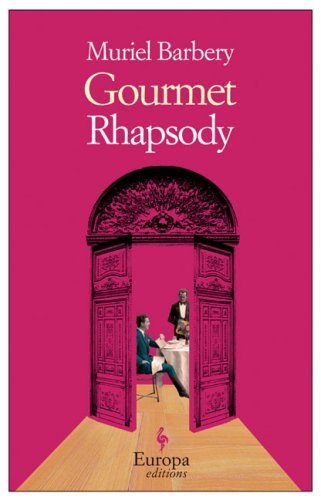
I recently finished a charming little tome entitled Gourmet Rhapsody by French writer Muriel Barbary, the author of the bestselling Elegance of the Hedgehog, which is marvelous. Funnily enough, her editor here in the States is actually a good friend of Vronsky's and mine, and is an excellent cook himself.

In Gourmet Rhapsody, the snooty, difficult, and aloof Pierre Arthens lays dying in apartment on the rue de Grenelle. Pierre also happens to be the greatest food critic France has ever known, and as he reflects upon his life in his final hours, he finds himself searching for that one last taste, a taste he cannot quite define or specify, but that he yearns for with all his waning strength.

I doubt it was Hungry Man Salisbury Steaks.

But as I said, cravings are powerful things, and Pierre sifts through a lifetime of memories surrounding food. From the perfect brioche to his first taste of sushi, for him, food is an inseparable combination of the sensation of taste, texture and association. He believes that the best chefs in all of Paris are striving to capture that same magical emotional response they first got from their grandmama's beef bourguinon, and what finally satiates Pierre's craving will surprise you.

I've had all sorts of bizarre cravings in my life, usually centered around something cheese related. I know, I'm a freak. Who craves cheese? This must be a sign of some sort of nutriet deficiency. I am half-Chinese, after all, and petite--a walking poster child for early-onset osteoporosis--but still. I am clearly getting enough diary between my greek yogurt, granola and banana parfaits in the morning and this constant search for cheese. Brie, manchego, Dublin cheddar, you name it, I will eat it. I had these amazing goat-cheese and leek crepes from Le Bonne Soup last week that were incredible. Mmmm...I wish I had some brie right now with some some raspberry quince jam or dried apricots. I must make a trip to the store.

I don't usually crave sugar, but every once in a while I will get an intense yen for strawberry ice cream in a cake cone. Not the fancy waffle cones. Those artificial beige cake cones. The kind they used to serve at the old school baskin robbins. Or chocolate covered almonds. Mmm.

Sometimes cravings are obviously nutrition related. After a nasty bought with the stomach flu, I craved some perfectly blanched broccoli with lemon. I love broccoli, but it was probably also due to the fact that I had nothing but saltines and tea for two days and needed some actual vitamins.

I went backpacking for a week up in Isle Royale, which is about 3 hours each way smack dab in the middle of Lake Superior, so obviously we had to pack in all our own food, and at the end of the week, I would have killed some one for some clementines and pineapple. After every triathlon I've ever done, I crave BBQ chicken pizza.

One day at work I had a craving for a turkey sandwich on rye bread with tomato, sprouts, and a little spicy mustard. April Bloomfield of Breslin apparently craves tea and biscuits (that's cookies to us non-Brits) on a regular basis. Vronsky has craved miso soup. My roommate currently has a craving for cauliflower mashed potatoes, and we planning on making some Sunday night.

What about you? What are some of your weirdest cravings?

Saturday, December 19, 2009

William Grimes: Personal Hero

There is nothing I can say about this man that does not come through in this great New York Magazine article that follows him throughout a weekend. Grimes is a former New York Times food critic and book reviewer (he gave one of Pegasus' titles a rave review and that book is still hot, thanks to him), and he is the author of Appetite City: A Culinary History of New York, which is certainly on my Christmas wish list.

http://newyork.grubstreet.com/2009/12/food_historian_william_grimes.html

Read and be inspired! The man grows his own kale, makes his own Vietnamese-style sandwiches, and has home made coffee-cake every morning, for cryin' out loud!

Thursday, November 12, 2009

Leçons de choses: Lessons from Things


I wrote my first fan letter last week. And yes, it was to New Yorker writer and acclaimed author Adam Gopnik regarding his marvelous little book, Paris to the Moon. Make fun all you want, but I don't think this is more laughable than those of us who have written fan letters to The Backstreet Boys or New Kids on the Block, or the like. (And you know who you are!). PLUS, I got a response from Gopnik. I doubt Nick Lachey ever wrote back.

Anyway, Gopnik's charming book is a loose collection of vignettes and meditation from his time in Paris, where he lived with his wife and young son for several years. There is an old Oscar Wilde saying that goes "when they die, all good Americans go to Paris," and indeed, for all its ills, Paris still embodies a sort of paradise in the American cultural psyche. Nobody gets fat, everybody has something profound to say, and the food is always amazing.

Many parts of Paris to the Moon are laugh out loud funny, from when Gopnik joins a Parisian gym (and the term "gym" is used very loosely here), to his month-long battle with French Christmas-tree lights that borders on existential (French lights are very different from American lights, you see). But the part of his book that I found most remarkable was a section entitled "Lessons from Things."

Luke, Gopnik's young son, is enrolled in a local pre-school. Part of the curriculum is something called leçons de choses, which gathers valuable wisdom from the process of turning stuff into things. Bricks (stuff) being turned into a house (a thing). Seeds, dirt, sunlight and water (more stuff), will all somehow create a flower or a plant (another thing). How does it happen? What is the lesson from it? It is a oddly lyric way of approaching the world, and Gopnik marvels at the "lessons" we all learn from these "things" when we take a similar approach has these pre-schoolers.

For example, it almost seems just short of divine when you think about how pots of paints and brushes (stuff), when put together in just the right sort of way, with the right kind of vision, becomes a priceless painting (a thing). Lumps of stone somehow become beautiful sculptures, letters and words, formerly gibberish, become books and poems. Musical notes, put together one way, its mere cacophony. Another way, it is symphony or a song. Indeed, there are a lot of lessons we can learn from the process of transforming stuff into things, but no where more does Gopnik find this more profound than when it comes to cooking.

Mere mortals probably don't have what it takes to put stuff like musical notes or paints into too amazing of a "thing." But most people can put together "stuff" like bread, mustard, turkey slices, and lettuce into a damn good turkey sandwich. You don't even need the trans-formative power of heat to make a good salad, just the proper selection of stuff, to make a marvelous thing to eat.

When Gopnik moves beyond the very elementary level of sandwich and salad making, however, the magic of "stuff into things" becomes even more incredible. The lumps of raw meat and bevy of mysterious bottles filled with spices on his counter somehow becomes an delicious roast chicken. Vegetables with dirt still on them eventually become soup. Seemingly disparate ingredients somehow become a tasty crepe. There are a lot of lessons to be learned from these things indeed, and I am a firm believer that cooking and understanding food at its most basic level makes one appreciate their meal on a whole new level. I would have enjoyed my evening at Savoy no matter what, but the fact that I have still not yet achieved a perfect crack-ly skin on my roast chicken, despite many valiant efforts, made me savor the marvelous texture of Savoy's salt-crust baked duck even more. What else could I learn from the marvelous things on my plate?

Perhaps nothing else, perhaps just the fact that cauliflower is an under appreciated vegetable in my kitchen, or that raisins go with a lot more than just oatmeal, or that I really need to expand my horizons when it comes to cured meats, as there are some awesome things out there besides salami and chorizo.

Conversely, attempting to cook news things on my own have made me a better "order-er" in a restaurant. I sincerely believe that cooking makes you want to explore new flavor combinations and take a bit more risk with your dinner, especially when the person in the kitchen is a trained professional. Learning to cook is not as difficult as one might think. Just remember Remy and Chef Gasteau's motto from the great Disney movie Ratatouille: Anyone can cook!

They can and they should. Just start small. Some pasta here, then try some chicken, and maybe an omelet. You'll be braising short ribs in no time. Not only is it more economical, frequently healthier, and a great de-stressor at the end of the long day (Mad at your boss? Get out the big knife and start dicing some onions, pretending it is their face. Or something.), but cooking opens up an entire world of new discoveries, those little leçons de choses that make life (and meals) that much more fun.


Feeling even more ambitious? Check out My Cooking Party. I did this two years ago with two other friends and we had an absolute blast. You basically play "sioux chef" in a real, mini- restaurant style kitchen to a head chef who has put together a 4 course meal. You all pitch in to make the dishes, and once it is done, you sit down and eat it. It is a great hands-on way to learn that is fun and can appeal to all skill levels. Plus, they throw in a few bottles of wine that match the food with the price of the class. Opa!

Tuesday, October 6, 2009

An Alphabet for Gourmets


Monday was a sad day. Hot off the heels of Pickle Day, I heard some crushing news: Gourmet Magazine was closed by Condé Nast in light the magazine empire's continuing financial struggles.

Working in publishing, I truly do understand the delicate financial situation and tough business model inherent to the business. That said, I loved Gourmet. Not only was the incredible Ruth Reichl at the helm as editor in chief (former food critic of the New York Times and author of excellent books like Garlic and Sapphires and Comfort Me With Apples), but Gourmet was one of the few places left that published true food writing in the style of M.F.K. and other greats alongside more standard fare like recipes and critiques and chef profiles.

M.F.K. Fisher wrote for Gourmet for many years, and one of my favorite pieces of hers that was published in the magazine was the series "An Alphabet for Gourmets." Perhaps someday I will do a mini-series running through the alphabet on my own, but for the moment, her choice for the letter "A" resonated with me, and is perhaps my favorite "letter" in the series.

A is for Dining Alone.

It is clear from so many of M.F.K.'s writings that she loves sharing the pleasure of a good meal with those she cares about, whether she cooks it herself or is in the company of "another" at a restaurant. Yet as she progresses in her career and becomes increasingly well-known, she finds herself in a lonely position atop a culinary pedestal. Friends who would normally invite her over for dinner now no longer do so, and excuse themselves by saying that they simply wouldn't dare cook for her. And dinning out with company becomes an increasingly stilted affair, as the "other" feel inclined to critique and analyze every nuance of her reactions to the food, what she orders, how she sits, to the point that she must reconcile herself with dining alone.

Dining alone is a tough thing. And I am not talking about eating off your knees in front of the television and shielding yourself from your "alone-ness" with the appearance of busyness, be it with the TV on, tidying up, or even eating on the go. Not this does not have a time and place, but this is not "dining" to M.F.K. It is merely eating to live, and she is someone who has always, in true gourmet fashion, lived to eat.

Dining alone means relishing your meal while enjoying the company of ones own self and the passel of thoughts and musings residing just below the surface of the mind. This can be quite intimidating. Not to mention all of the perceived social stigma that accompanies a person dining alone. Often, the sight of a lone diner evokes pity, when it really should evoke admiration that someone is so secure in themselves that they can go out and enjoy a good meal and their own company.

As Fisher herself says in her essay:

'“Never be daunted in public,” was an early Hemingway phrase which had more than once bolstered me in my Timid Twenties. I changed it now: “Never be daunted in private,” I said resolutely…"

It is a good mantra, and over the past few years, I have increasingly come to enjoy dining alone, although admittedly I sometimes still hide behind the "shield of busyness" and bring along a manuscript I am editing, book, or magazine to ward off any advances or interruptions to my solitude. I have come to find that when I am stressed, confused, or have the blues, a glass of wine and a hot meal at a nearby bistro is just the thing I need to sort myself out. That feeling of being alone in a crowd is the perfect setting for self and gastronomical reflection, and while I still prefer the company of another, there is something to be said for never being daunted in private.

Friday, October 2, 2009

Babbo is my new sweet baboo


On Tuesday, Vronsky and I went to dinner at Babbo with a friend of ours to "pay him back" for writing an introduction to one of Vronsky's books. This was much nicer than paying him a real advance, as we also got to partake. I will say, however, it was probably about as expensive in the end.

But you know what? That's just fine, because Babbo is a New York culinary landmark, and I have been fascinated by Mario Battali's work ever since reading Bill Buford's fantastic book Heat years ago. I know I've mentioned this book before, but here it is again. Buford, formerly of the New Yorker and founder of Granta Books, quit his gem of a job at the magazine (!) and goes to work in Battali's kitchen at Babbo. There are no shortcuts on the New York food scene, and Bill starts out as a "kitchen slave" chopping vegetables and taking out the garbage, slowly working his way up to line and pasta cook, which is no small feat. He then travels to Tuscany and "interns" with a Tuscan butcher and learns the ancient tradition of Tuscan cooking. In fact, even the use of cutlery originated in Tuscany and spread to the rest of Europe when one of the de Medicis traveled to France and took forks and a whole new way of preparing food with her.

It was in this region that Battali (and Buford) hand-roll pasta on oak boards, using no water, just the egg of a wild chicken, which is so rich that the yolk is almost red compared with the commercially farmed eggs we are used to. They learn how to make their own salumi and prepare sweet breads and cheeses. The entire process has such a delicious lyricism to it, and Buford's description of all this wonderful food made my stomach grumble.

Needless to say, I had constructed quite a fantasy as to what to expect when I finally had the chance to dine at Battali's flagship, the mecca of his vision. I am pleased to say, it lived up to its expectation and more!

The three of us decided to be super decadent and ordered the tasting menu with wine pairing.

First up, was duck bresola with parmigiana and aceto manodori, which is essnetially duck bacon and a sort of Parmesan cheese custard on the side. Divine. I wish I could have duck bacon instead of regular bacon for the rest of my life. No exaggeration.

Next up was parpardelle with chanterelle mushrooms and thyme. Here is where that hand-rolled pasta comes into play. It is so smooth and has such a velvety texture, it complemented the flavor of the mushrooms perfectly. Vronsky doesn't really like mushrooms, and I love them, so I got double the pleasure!

Then we got duck tortellini with sugo frito, which is a fresh tomato based sauce. It was incredibley rich and I am glad we only had a few squares, as I wanted to make sure I saved room for what came next: pork tenderloin with pumpkin fregula and a black truffle vinaigrette. Whoo wee did they save the best for last.

The pork was perfectly seared–juicy and flavorful with a tiny bit of awesome chew gristle on the end. And the fregula was light and airy in texture which contrasted nicely with the earthy flavors of the pumpkin and truffles. I really wished there was more of this dish, and hope it is still on the menu when I go back so I can order it as a full entree.

Next came the cheese course, which was goat brie with fennel honey. I love any and all cheeses, and this one was excellent, especially with the fennel honey. I should learn how to make it or at least where to buy it so I can eat all my cheese with it in the future. I even ate half of Vronsky's cheese when he went to the bathroom, oops.

And THEN we had dessert. Three of them. First was a gelo alla siciliana, which was essentially a cold watermelon puree that was unlike anything I had ever eaten before. It was a odd cross between a smoothie and a gelato, and I loved it.

Next came a chocolate tartufino, which was heaven for Vronsky, a chocolate lover, but I preferred our final dessert, the sweet plum belizia with cinnamon fior di latte. I adore fruit-based desserts, and this one was excellent. Plus, cinnamon makes anything better.

By this point, the three of us are so stuffed that we can barely get up out of our seats. We had planned to order some celebratory glasses of prosseco, but I had no room in my belly by that point. Thank the lord I was wearing a dress and not pants or even a skirt without enough give. If only someone would design a stylish skirt or trousers with an elastic waist, I would buy it in a heartbeat and reserve it for all Babbo dining adventures. Fancy!

Visit http://www.babbonyc.com/ for reservation information. It takes forever to get through to someone and you have to plan a month out, but it is well worth it. Hit the phones!

Wednesday, September 23, 2009

España


There once was a time when I knew very little about Spain and Spanish culture and food. I still cannot speak a word of proper Spanish, but the former was remedied by a good friend of mine, Mike, starting three years ago while back in Virginia.

You see, I had recently graduated and desperately wanted to do the whole "backpack around Europe" tour. I had the whole route planned out (Paris, Berlin, Munich, Vienna, Prague, Switzerland, perhaps a stop-off in Naples if the EuroRail allowed) but could not find a single person who wanted to join in. This actually was my second disappointment for my grand post-grad travel dreams. Initially, being a crazy Russophile, I wanted to take the trans-Siberian railroad from Moscow to Beijing, and I certainly could not find anyone willing to do that with me either.

Mike though, being a Spanish minor, had plans to go to Spain, and while at my house one day eating my mom's spaghetti, I decided to join him. Seeing as our combined net worth was about $11, it was probably a wise decision on my part to limit my adventures to just one country, especially a country where we already had friends living and would have a place to hang our hats.

We planned out a grand tour, starting in Madrid and then heading north to Bilbao and San Sebastian. Incredible artwork (the Parado and Guggenheim are reason enough to book a flight) and beaches aside, I fell forever in love with Spanish food and wine and to this day seek it out whenever possible.

Incidentally, this trip also forever soured me towards Indian food. Trying to be frugal, we flew over on Air India. A ten hour flight surrounded by the smell of cheap airplane-food grade curry while feeling like a raisin from dehydration is enough to turn anyone off to any cuisine. A shame, as I am sure I am missing out, but perhaps in another year or two I will have finally gotten over it. Mike, have you?

Back to Spain. Mike is somewhat of a gastronome himself and so we made the extra effort to try ever possible tapas and pinxtos (Basque for tapas) during our two weeks. From every incarnation of empanada to Catalonian flatbread, Rioja wine, calamari fritas, and manchego cheese, I was in gastronomical seventh heaven.

Not that there weren't pitfalls along the way. Due to the uniquely Spanish schedule of "siesta" we were always a bit groggy after our naps yet wanted to get the party started (seeing as it was now 8pm). So we developed the rather strange predilection for "cafe con leche con whiskey." Yep, coffee with milk and whiskey. Yech. However, it did do the trick of both waking us up and getting us drunk. Heigh ho. Also, Mike almost got robbed by gypsies and apparently the lovely men of Bilbao had never seen a Chinese person before and had a field day trying to talk me. The fact that I spoke no Spanish did not deter them, nor did the fact that I am only half Chinese and therefore, was not even the real deal.

Nonetheless, it was a wonderful trip and served as an introduction to Spanish cuisine that I try to eat whenever possible. I always have manchego cheese on hand and frequently make "Spanish Caprese" in my apartment.

Pour balsamic vinagrette into a small saucepan and reduce (and thicken with cornstarch if neccessary). You can also buy balsamic reduction in gourmet food stores.

Take roma tomatoes (they are smaller than heirloom and usually oval shaped), and slice them into wedges.

Arrange artfully on a plate and sprinkle liberally with goat cheese.

Drizzle olive oil and your balsamic reduction over the tomatoes and cheese and enjoy! MUCH better than "regular" caprese with mozzarella (no flavor) and only olive oil. The balsamic gives it so much more taste and tang than basil, and clings wonderfully to the goat cheese and tomato wedges.

I also have a growing list of favorite tapas places in New York. Alta in Greenwich village is wonderful and if I ever do an Ironman, Vronsky is taking me there and we are ordering everything on the menu for $400 (yes, this is something the restaurant actually allows you to do, which makes me love it even more). Make sure you get the bacon wrapped figs and olives to start.

Casa Mono
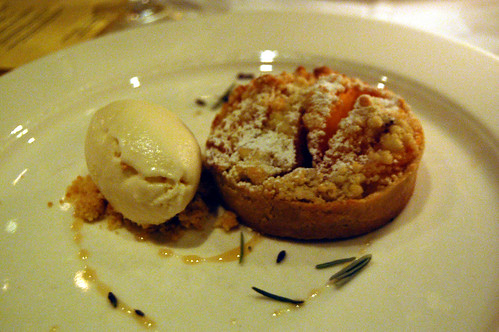
in Gramercy is fantastic and has great wine. Their sweetbreads are incredible, and the head chef used to be the sous chef at Mario Battali's Babbo. The creation of Casa Mono is discussed at length in Bill Buford's excellent book Heat. (Food featured in picture above)

Flor de Sol in Tribeca has flamenco dancing and great atmosphere, and Pipa: Tapas Y Mas has the best calamari in all the land. I am not making this up. It is also decorated with beautiful chandeliers from ABC, so when you are reveling in the calamari and enjoying your Rioja and therefore in a fantastic and generous mood, you can contemplate what that gold crystal one would look like in your 3 ft by 10 ft bedroom. Obviously, it would look awesome.

Friday, September 11, 2009

"How to Cook a Wolf"


The title of this post, "how to cook a wolf," comes from MFK Fisher's collection of essays by the same name. Obviously, neither she nor I mean this phrase literally. Rather, "the wolf" is a metaphor for hunger, fear, loneliness, or any similar emotion that threatens to engulf you, much the way a literal wolf actually can.

MFK believed that one could "cook" away these emotions, your wolf, as it were. In her particular case, this was a good move, as the essays from this period were all written during World War II–a time of food rations and much hunger, loneliness, and fear.

On a day with a history like today, such emotions are equally appropriate, and I believe, like MFK did, that food can provide at least a modicum of comfort to those facing down some wolves of their own. For me, food is a strange amalgam of comfort, love and family. As an old Russian proverb goes, "And as I say 'I love you,' so too I say, 'come eat.'"

And more to the point of wolves, one of my favorite books that I have had the privilege to publish is a memoir entitled The Philosopher and the Wolf by Mark Rowlands. In this instance, the wolf, Brenin, is Mark's companion, and embodies what is noblest becomes a sort of metaphysical ideal that Mark strives to engage with, both as a man and as a philosopher (he is currently a philosophy professor at the University of Miami).

To wit, Mark and Brenin find themselves living in the south of France midway through the narrative. The two have settled into the peculiar routine of walking to town each morning and getting two plain croissants at the little village patisserie –one for Mark, one for Brenin. Luckily, the pastry chef is not the least disturbed by the incongruous pair.

After about a month of daily croissants, Mark realizes that Brenin is as grateful and joyful to eat his croissant each morning as he was the day before. He is as happy as teh day he tasted that first croissant.

Granted, these are incredible croissants–large and airy, yet packed with a rich, buttery taste that melts in the mouth. Yet Mark cannot help but think that most people would grow weary of these croissants, no matter how lovely and delicious they are. Brenin, however, never thinks, "Oh jeeze, another croissant? When is this guy going to take me to get a bagel? Or a muffin? Or even a scone?" The joy of today's croissant is not diminished by the anticipation of future croissants, nor is it sullied by the fact that maybe that croissant from three days ago was a bit larger. Nope. For Brenin, each croissant is its own little miracle and reward in and of itself. It doesn't need butter or jam, and the fact that he had one yesterday, and will most likely get one tomorrow, God willing, is immaterial. The croissant is good, just as it is.

And, indeed, so are most things. So to everyone out there, I hope you too enjoy and savor your croissant.